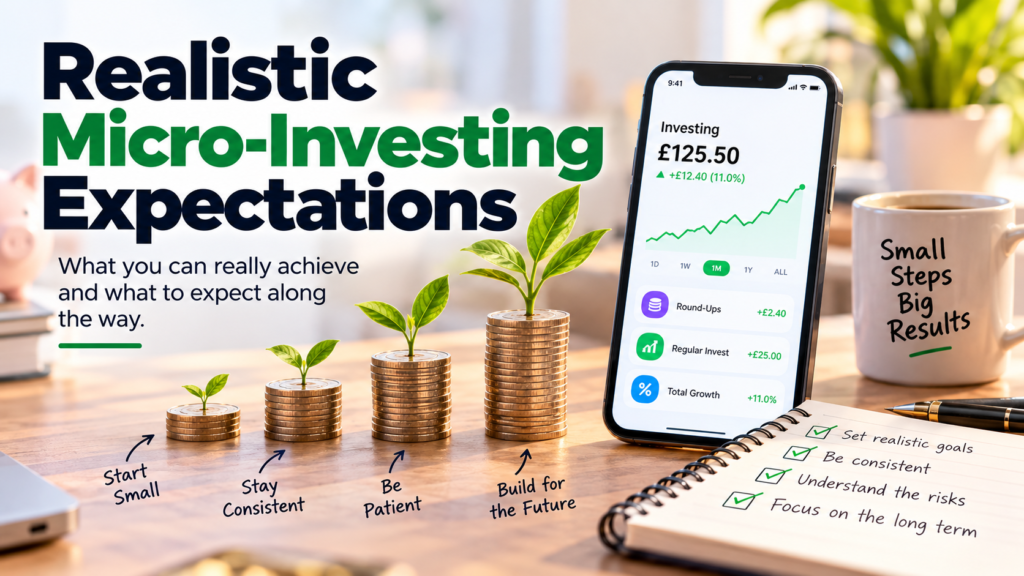

Micro-investing makes it possible to put small amounts of money into investments regularly. But an accessible starting point is not the same as a shortcut to wealth. Setting realistic expectations helps you choose an affordable contribution, understand uncertainty and measure progress without becoming distracted by daily market movements.
What should you realistically expect from micro-investing?
Expect to build a habit, gain familiarity with investing and potentially grow your money over many years. Do not expect predictable monthly profits, protection from market falls or enough returns to replace an income quickly. A £5 weekly investment can be worthwhile as a learning tool, but the amount you contribute, fees and investment performance all matter.
Start with a goal, not a promised return
Decide what the money is for and when you might need it. Money for next month’s rent or an imminent bill generally belongs in accessible savings rather than stock-market investments. Investing is usually more suitable for longer-term goals where you can tolerate fluctuations and potential losses.
Before investing, consider expensive debt, essential bills and an emergency cash buffer. See our guide to building an emergency fund before investing.
What could small regular investments become?
The following figures are illustrations, not forecasts. They assume contributions at the end of each month, a constant hypothetical 5% annual return compounded monthly, and no platform fees, tax or inflation adjustment. Actual markets do not deliver smooth or guaranteed returns.
| Monthly contribution | Years | Total paid in | Illustrative ending value at 5% |
|---|---|---|---|
| £10 | 10 | £1,200 | About £1,553 |
| £25 | 10 | £3,000 | About £3,882 |
| £25 | 20 | £6,000 | About £10,276 |
| £50 | 20 | £12,000 | About £20,552 |
The main lesson is not that 5% will happen: it is that regular contributions and time can make a meaningful difference. With poor returns, the ending balance could be much lower than these examples, including less than you paid in.
Account for inflation
£1 in the future may buy less than £1 today. An investment balance can rise in pounds while its purchasing power grows slowly or even falls. Judge long-term progress in real terms, after inflation, rather than looking only at the headline account balance.
Understand the effect of fees
Platform subscriptions, fund charges, dealing fees and currency conversion charges can consume a large share of a small account. For example, a £2 monthly subscription costs £24 annually: that equals 24% of a £100 balance before considering investment returns. Compare total costs in pounds and percentages, and read our guide to micro-investing fees.
Expect setbacks and volatility
Shares and funds can decline, sometimes sharply. A diversified portfolio can reduce concentration risk but cannot eliminate market risk. Read whether you can lose money with micro-investing and our beginner’s guide to investment risk.
Five useful ways to measure success
- Consistency: Did you contribute what you could comfortably afford?
- Cash resilience: Can you handle an unexpected bill without selling investments?
- Cost awareness: Do you understand what the platform and funds charge?
- Portfolio fit: Does the level of risk suit your goal and time horizon?
- Learning: Can you explain what you own and why?
Review your plan periodically rather than treating each market move as a verdict. Our article on how often to check a micro-investing account explains why constant checking can be unhelpful.
Common expectation traps
“Small investments cannot matter”
Small amounts can establish a sustainable habit, although contributions may need to increase over time to meet larger financial goals.
“Compound growth guarantees wealth”
Compounding can magnify gains over time, but investments can lose value and returns vary. Learn more in our compound growth explainer.
“A regulated app means my investment cannot fall”
Regulatory oversight and investment performance are different issues. UK Financial Services Compensation Scheme protection, where applicable, does not compensate ordinary market losses. Check a firm’s permissions on the FCA Financial Services Register and read the FSCS explanation of investment protection.
A practical 90-day expectations plan
Month one: Identify your goal, build a budget, review debt and emergency savings, and compare fees. Month two: If investing is appropriate, set an affordable recurring amount and learn what the underlying fund owns. Month three: Check whether your contributions are sustainable and your costs remain proportionate. Do not judge the strategy solely by three months of returns.
Frequently asked questions
Can micro-investing make me rich?
It can be one component of a long-term financial plan, but very small contributions alone may not be sufficient for large wealth goals. Results depend on contributions, time, fees, inflation and uncertain returns.
How much should I invest each month?
Only an amount you can afford after essential expenses and suitable cash savings. There is no universal minimum that makes sense for everyone.
When should I expect to see a profit?
There is no reliable timetable. Your investments may rise or fall over months or years, and short-term performance is not a dependable test of long-term success.
The bottom line
Realistic micro-investing expectations focus on behaviour you can control: contributing sustainably, understanding risks, minimising unnecessary fees and investing for an appropriate time horizon. The returns themselves are never guaranteed.
Important: This article provides general information, not personalised financial advice. Investments can fall as well as rise, and you may get back less than you invest. Consider regulated financial advice if you are unsure what is suitable for your circumstances.