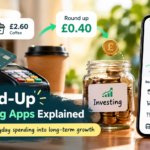

Round-up investing apps turn everyday spending into small investment contributions. Instead of deciding on a separate amount to invest after every purchase, the app rounds eligible transactions up to the nearest pound and puts the difference towards saving or investing.
For example, if a qualifying purchase is £3.60, a round-up would typically be 40p. Small amounts can be useful for building an investing habit, but they are not a shortcut to guaranteed returns. Investments can fall as well as rise, and fees matter even when each contribution is tiny.
This guide compares the main features to look for in UK round-up investing apps and highlights Moneybox, Plum and Chip based on information available from the providers. The aim is not to declare one app universally “best”, but to help you match the feature set, fees and level of control to your own needs.
What makes a round-up investing app useful?
A good app should make small contributions easy without hiding the important details. Before choosing one, check:
- How the round-up works: whether purchases are rounded to the nearest pound and when the money is collected.
- Where the money goes: savings, a cash product, a fund, an ISA or another investment account.
- Investment choice: ready-made portfolios, funds, ETFs, individual shares or a combination.
- Fees: subscription charges, platform or service fees, fund costs and transaction charges.
- Tax wrapper availability: for example, whether the provider offers a Stocks & Shares ISA.
- Control: whether you can pause round-ups, change the destination or adjust other automated deposits.
- Risk information: whether the app makes it clear that investment values can go down as well as up.
1. Moneybox — a strong choice for round-up investing
Moneybox is one of the clearest fits for people who specifically want to turn spare change into investments. Its round-up feature connects eligible spending activity and rounds transactions to the nearest £1. Moneybox says the collected round-ups are normally taken from the linked account and added to the Moneybox balance on its collection schedule.
Moneybox also offers Stocks & Shares ISAs, General Investment Accounts and other investment products. This makes it particularly useful for someone who wants to start with small automated contributions and later use a wider range of investing options.
Its current published investment pricing includes a £1 monthly subscription after the introductory period, although the subscription can be waived for customers meeting certain £5,000 balance conditions. Moneybox also publishes separate service fees depending on the investments selected: 0.15% for Moneybox funds and 0.45% for other providers’ funds, with fund-provider charges applying separately.
Best for: beginners who want round-ups connected to a broader UK investing platform, including Stocks & Shares ISA options.
Watch: do not compare the £1 subscription in isolation. The total cost depends on the account, investment and underlying fund charges.
2. Plum — useful for combining round-ups with automated money rules
Plum takes a broader automation approach. Its Round-Ups rule rounds eligible bank transactions up to the nearest pound. Plum says it normally calculates the previous week’s transactions and consolidates the resulting amount into a weekly deposit rather than moving money after every individual purchase.
Plum also offers other automated rules, such as weekly and payday deposits. Its current UK subscription information shows Round-Ups available on the Basic plan, which is free, while paid plans add further features.
One useful feature is the ability to split automated deposits between different destinations. Plum says automated deposits can be allocated to areas such as Pockets, mutual funds, ETFs, Plum Interest, Cash ISA and Lifetime ISA products, subject to the provider’s rules. This can make the platform attractive if you want your small automated contributions to feed a wider financial plan.
Best for: people who want round-ups alongside a wider set of automated saving and investing rules.
Watch: Plum’s product availability, subscription tiers and investment charges can vary by product, so check the current fee schedule before committing.
3. Chip — better suited to automated investing with curated funds
Chip positions itself as a wealth app combining saving, investing and pensions. Its investment platform offers Stocks & Shares ISAs, General Investment Accounts, ready-made options and a curated range of funds from providers including BlackRock, Vanguard, Invesco and HSBC.
Chip also offers auto-investing and says its smart Auto-investments feature can analyse spending habits to help determine an amount to invest. Its current investment page states that the free plan has a 0.25% platform fee, while the platform fee can be 0% with a ChipX membership; fund management charges still apply.
Chip’s investment service is therefore worth considering if your priority is automated investing and a curated fund selection rather than simply collecting spare change. As with any investment service, the fact that contributions are automated does not remove investment risk.
Best for: investors who want automated contributions, curated funds and a broader investing platform.
Watch: compare the platform fee, any membership cost and the fund’s own management charges before choosing an investment.
Moneybox vs Plum vs Chip
| App | Round-ups | Investing options | Good fit for | Key cost check |
|---|---|---|---|---|
| Moneybox | Yes | Funds, Stocks & Shares ISA, GIA and more | Round-up-first beginners | Subscription + service fee + fund costs |
| Plum | Yes | Investment and savings products, depending on plan | Automation-focused users | Subscription + product-specific investment charges |
| Chip | Automation-focused | Stocks & Shares ISA, GIA and curated funds | Automated fund investing | Platform fee + membership if applicable + fund costs |
Are round-up investing apps worth it?
They can be useful if the main problem is consistency. A 20p, 40p or 70p contribution may feel insignificant, but an automated system can remove the need to remember to invest manually.
However, round-ups should be viewed as a contribution method, not an investment strategy by themselves. The underlying investment still determines the risk and potential return. A diversified fund held for a suitable long-term period is a very different proposition from buying individual shares simply because an app makes the process easy.
It is also worth checking whether the small contribution is actually cost-effective. A fixed monthly fee can represent a relatively large percentage of a very small portfolio. For example, a £1 monthly fee is £12 a year before any percentage-based service or fund charges. As your balance grows, the impact of a fixed fee may become smaller, but it still belongs in your comparison.
How to choose the right round-up investing app
Choose Moneybox if round-ups are the priority
If your main goal is to turn spare change into investments and you want access to UK investing wrappers such as a Stocks & Shares ISA, Moneybox is a natural starting point.
Choose Plum if automation is the priority
If you want round-ups to sit alongside other automated saving and investing rules, Plum’s broader automation system may be a better fit.
Choose Chip if curated fund investing is the priority
If you are more interested in automated investing through a curated fund range, Chip offers a wider investment-focused platform with ready-made options and auto-investing tools.
What about bank-based round-ups?
You do not always need a dedicated investing app to automate spare-change saving. UK banks including Starling, NatWest and RBS offer round-up features that move the difference into eligible savings accounts or spaces.
That can be a better option if your immediate goal is building an emergency fund rather than taking investment risk. Once your cash buffer is in place, you can decide whether regular investing is appropriate for money you can leave invested for the long term.
Important risks and checks
Automated investing is still investing. The Financial Conduct Authority advises consumers to understand both opportunities and risks, and to check whether an investment firm is authorised for the service it provides.
Do not assume that a familiar app means every product inside it is suitable for you. Check the exact account, investment, charges and protections that apply to your money. Also remember that investment values can fall and you may receive back less than you invest.
Bottom line
There is no single best round-up investing app for everyone. Moneybox stands out when round-ups and mainstream UK investing accounts are the priority. Plum is attractive for users who want round-ups as part of a wider automation system. Chip is worth considering if curated funds and automated investing are more important than the round-up feature itself.
Whichever route you choose, compare the total cost rather than just the headline subscription, understand what your round-ups are invested in, and make sure the money is suitable for a long-term investment horizon.
Financial education, not personal financial advice. Investments can fall as well as rise and you may get back less than you invest. Tax treatment and product availability depend on individual circumstances and can change. Check the provider’s current terms, fees and FCA status before opening an account.