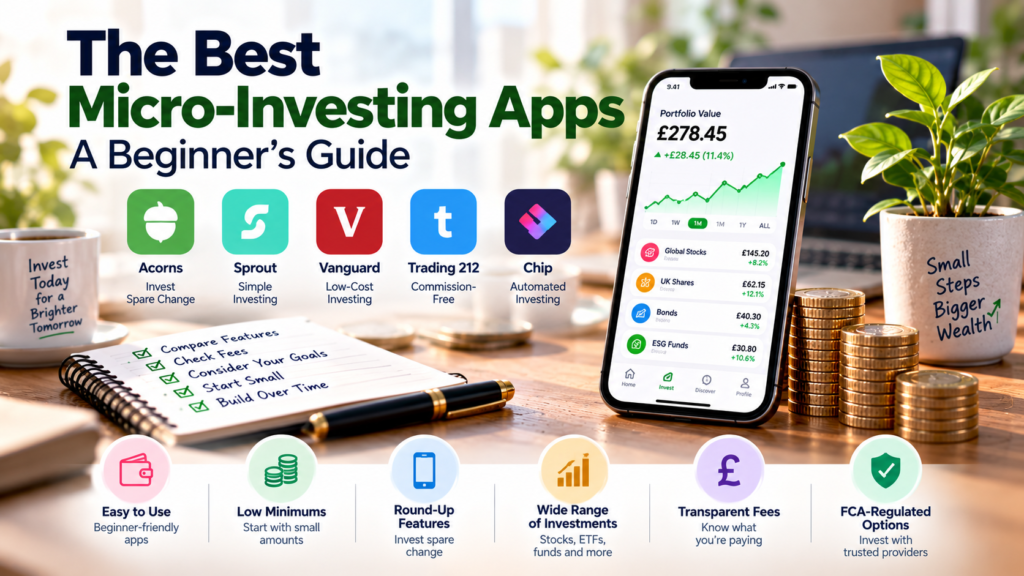

Micro-investing apps can make it easier to start investing with relatively small amounts. They can bring recurring contributions, fractional investing, portfolio information and account management into one mobile interface. But a simple app does not automatically mean a simple investment.
For beginners, the important question is not which app has the most features. It is whether the platform, investment product, costs, risks and account terms make sense for the way you intend to invest.
What Is a Micro-Investing App?
A micro-investing app is a mobile or web-based investment service designed to make relatively small investments easier to manage. Depending on the provider, it may offer recurring deposits, fractional shares, funds, ETFs, managed portfolios or other investment products.
The term “micro-investing app” describes the way the service is used more than a particular type of investment. Money invested through an app can still be exposed to the same market risks as investments made through other channels.
If you are new to the concept, start with our guide What Is Micro-Investing?, then read How Does Micro-Investing Work? for a step-by-step explanation.
Why Do Beginners Use Investment Apps?
- Small starting amounts: some services are designed to accommodate relatively small contributions.
- Automation: recurring deposits can reduce the need to make every investment decision manually.
- Accessibility: account information and investment instructions can be available from a phone.
- Fractional investing: some providers allow eligible investments to be purchased in fractions rather than whole units.
- Portfolio visibility: an app can make it easy to see holdings, contributions and account values.
These features can remove practical barriers, but convenience should not replace due diligence. The FCA advises investors to understand what they are investing in, the risks involved, the costs and whether the firm is authorised for the service it provides.
FCA InvestSmart: The golden rules of investing
What Should You Check Before Choosing an App?
1. What Can You Actually Invest In?
Start with the investment menu rather than the app’s appearance. A platform might provide individual shares, ETFs, mutual funds, managed portfolios or a smaller selection of products.
Two apps can both advertise small-scale investing while offering very different underlying investments. Check what the portfolio actually owns and whether you understand the role of each investment.
2. How Diversified Is the Investment?
Putting a small amount into one company does not make that investment diversified. A diversified fund may spread exposure across many companies, sectors or markets, depending on what the fund holds.
Diversification can reduce dependence on a single investment, although it cannot eliminate investment losses. The FCA notes that funds can provide greater diversification than buying a small number of individual shares directly.
FCA InvestSmart: Diversification
3. What Are the Total Costs?
Fees deserve particular attention when your balance is small. Depending on the provider and product, costs may include platform charges, trading fees, fund expenses, foreign-exchange charges, subscription fees or other account costs.
Do not stop at the headline phrase “commission-free”. Look at the complete fee schedule and consider what you would pay to deposit, buy, hold, sell, exchange currencies or transfer investments.
The FCA says investment charges can reduce returns over time and that investors should understand the costs before investing.
FCA InvestSmart: Is it the right investment for you?
4. Are Fractional Shares Available?
Fractional shares allow an investor to own less than one whole share where the provider supports the feature. This can make smaller contributions more practical when a full share is expensive.
However, fractional-share arrangements differ between providers. Check the current terms for eligibility, order execution, dividends, voting rights, transfers and what happens if you close or move the account.
5. Is the Provider Authorised?
If you are in the UK, check the Financial Conduct Authority’s Firm Checker or Financial Services Register before using an investment platform. The FCA says almost all firms providing financial services in the UK must be authorised or registered, and you should check that the firm has permission for the service you want to use.
Authorisation does not mean an investment will rise in value. It is a regulatory check on the firm and its permissions, not a guarantee of investment performance.
FCA: How to check a firm or individual is authorised
6. How Easy Is It to Withdraw or Transfer Your Money?
Before opening an account, find out how withdrawals and transfers work. An investment account may not provide instant access to cash, particularly when investments need to be sold before money can be withdrawn.
Check settlement times, withdrawal restrictions, transfer processes and any charges. Also remember that selling an investment can result in a gain or a loss depending on its market value at the time.
A Simple Micro-Investing App Comparison Checklist
| Check | What to ask |
|---|---|
| Investment choice | What shares, funds or ETFs can I actually buy? |
| Diversification | Am I relying on one company or a broader portfolio? |
| Fees | What will I pay to buy, hold, sell or transfer? |
| Fractional shares | Are fractions supported and what are the restrictions? |
| Regulation | Is the provider authorised for the service I want? |
| Withdrawals | How long does it take to access or transfer money? |
| Information | Can I clearly understand what I own and what it costs? |
Micro-Investing Apps and Automated Investing
Some apps let users automate regular contributions or use a managed portfolio. Automation can make consistent investing easier, but it should not be confused with guaranteed growth.
Before enabling an automated feature, understand where the money will be invested, how frequently purchases occur, what fees apply and how you can change or stop the instruction.
Should You Choose an App Based on Its Features?
More features are not necessarily better for a beginner. A complicated app with dozens of products may create more decisions without improving your understanding.
A useful beginner approach is to compare a small number of providers using the same checklist: investment range, diversification, fees, regulation, fractional investing, withdrawals and the quality of the information provided.
Common Mistakes When Using Investment Apps
- Choosing an app because it looks easy to use. User experience is useful, but it does not tell you whether an investment is appropriate.
- Focusing only on trading fees. Other charges can still affect your results.
- Buying whatever is trending. Recent price movements do not guarantee future performance.
- Confusing small contributions with low risk. The underlying investment can still lose value.
- Ignoring concentration. A portfolio can remain heavily dependent on one company, sector or market.
- Assuming regulation guarantees returns. Regulation and investment performance are different issues.
- Investing money needed for short-term expenses. Investments can fluctuate when you need the money.
A £25 Monthly Example
Imagine a beginner has decided that £25 a month is affordable after essential expenses and other financial priorities. They choose an investment platform, review its costs and select an investment they understand.
- Month 1: £25 is contributed.
- Month 2: another £25 is contributed.
- Month 3: another £25 is contributed.
- Over time, contributions continue only while they remain affordable and consistent with the investor’s plan.
After three months, £75 has been contributed before fees and investment performance. The account could be worth more or less than £75 because investment prices can move in either direction. The example illustrates how an app can facilitate regular contributions; it is not a forecast or return guarantee.
How to Compare Two Micro-Investing Apps
If you are comparing two platforms, write down the same information for each one rather than relying on advertising or app-store ratings.
- Minimum contribution and account requirements
- Available investments
- Fund or product charges
- Platform and trading charges
- Foreign-exchange costs where relevant
- Fractional-share rules
- Recurring-investment options
- Withdrawal and transfer rules
- Regulatory status and permissions
- Investor information and support
The goal is to understand the differences rather than assume that one platform is automatically suitable for every investor.
Where Micro-Investing Apps Fit in a Beginner’s Plan
An app is simply the delivery mechanism. Your wider investing plan still needs to consider your goal, time horizon, affordability, diversification, risk and costs.
For more on choosing an affordable starting amount, read How Much Money Do You Need to Start Investing?. You can also return to Micro-Investing for Beginners for a practical starting checklist.
Frequently Asked Questions
Are micro-investing apps safe?
“Safe” can mean different things. A legitimate, appropriately authorised platform can provide important regulatory protections, but the investments you buy can still lose value. Check the provider and understand the investment separately.
Do all micro-investing apps offer fractional shares?
No. Fractional-share availability depends on the provider and the particular investment. Read the current terms before assuming that a specific share or fund can be purchased fractionally.
Are investment apps free?
Some services advertise free or commission-free features, but that does not necessarily mean there are no costs. Check platform fees, product expenses, currency conversion costs, subscription charges and other applicable fees.
Can I lose money using a micro-investing app?
Yes. The app does not remove market risk. If the investments you own fall in value, your account value can fall as well.
Final Thoughts
A good micro-investing app should make the mechanics of investing easier to understand and manage, not encourage you to ignore the underlying investment.
Before choosing a platform, check what you can invest in, how diversified the available options are, what everything costs, whether fractional investing is supported, how withdrawals work and whether the provider is authorised for the service it offers.
The app is only one part of the decision. The investment itself, your financial position and your long-term plan matter just as much.
Educational note: This article is for general informational purposes and is not personalised financial, investment, tax or legal advice. Investments can fall as well as rise, and you may lose money.